18-Gauge Brad vs 16-Gauge Finish Nailer: Which 20V Tool to Specify
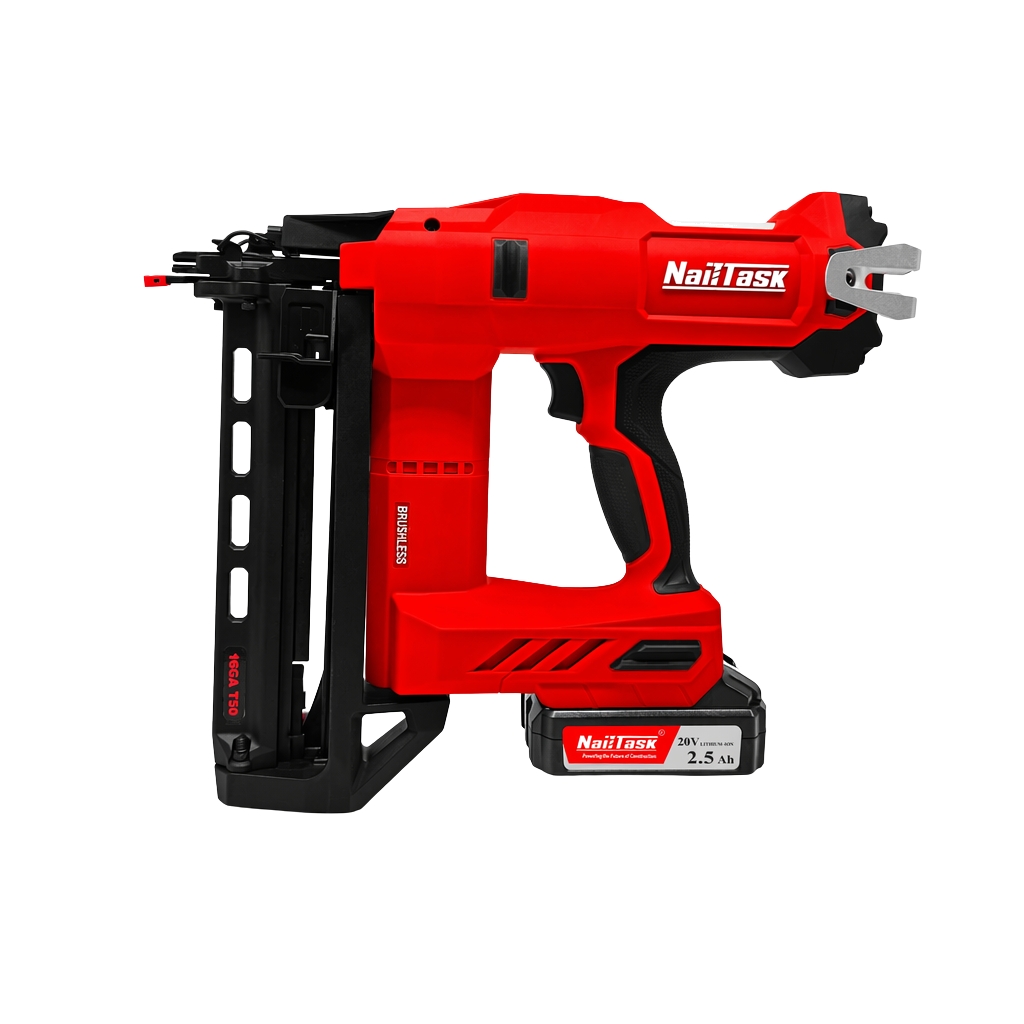
The two tools at a glance
Both models are 20V brushless cordless nailers with dual firing modes (single sequential and contact actuation), tool-free depth adjustment, and a 20V 2.5Ah Li-ion battery in the standard kit. Both list an operating temperature of -20°C to 50°C and the same family of safety features: anti-dry-fire lockout, contact actuation safety, overload and overheat thermal protection, and an LED safety diagnostic indicator. Neither requires an air compressor, hose, or gas cartridge.
The official differences that matter are:
- DCBN20-F32, 18-gauge brad nailer: 20J; 18GA brads 10–32 mm (3/8″–1-1/4″); wire size 1.12 × 0.8 mm; magazine 120 nails; up to 300 nails per minute; up to 2,500 nails per charge; body 260 × 80 × 230 mm.
- DCFN40-T50, 16-gauge finish nailer: 40J; 16GA straight finish nails 15–50 mm (5/8″–2″); wire size 1.40 × 1.64 mm; magazine 125 nails; up to 180 nails per minute; up to 1,200 nails per charge; body 340 × 100 × 290 mm.
The brad tool is the smaller, faster, lower-energy machine with a smaller fastener footprint. The finish tool offers twice the official impact energy, a heavier gauge, and a longer maximum nail, at a lower official firing speed and a lower nails-per-charge figure.
When to specify the 18-gauge brad nailer
Official applications for the DCBN20-F32 are fine woodworking, crown molding, baseboard installation, door and window casing, cabinet assembly, picture-frame joining, and interior decorative trim. Official substrates are natural hardwoods, softwoods, MDF, plywood, and composite boards. Official FAQ language notes that 20J is intended to be powerful enough to countersink 18GA brads in hardwoods such as oak and maple as well as in softwoods, MDF, and plywood, with actual performance depending on density and depth setting.
Specify the brad nailer when:
- The work is light trim, delicate molding, or cabinetry where a small hole is part of the finish quality
- Nail length up to 32 mm is sufficient
- A compact body (260 × 80 × 230 mm) and a high official firing speed are useful
- The crew wants a large 120-nail magazine and a high official nails-per-charge figure for long trim runs
A brad leaves a smaller hole than a 16-gauge finish nail, which reduces filling and touching-in on fine work. It also has less holding area. Do not use it as a substitute where a longer or heavier finish nail is required to hold a thick baseboard or a heavier casing.
When to specify the 16-gauge finish nailer
Official applications for the DCFN40-T50 are baseboard and skirting installation, door and window casing, decorative trim and molding, cabinet assembly and installation, furniture manufacturing and woodworking, interior finishing and renovation, and general finish carpentry. Official substrates include softwood (pine, cedar, fir), hardwood (oak and other suitable hardwoods), MDF, plywood, veneer panels, solid wood trim and molding, wooden baseboards and door or window casings, and cabinet components.
Specify the finish nailer when:
- The section is thicker or heavier, and a 16-gauge nail with a length of up to 50 mm is needed
- 40J of official impact energy is a better match for denser stock or longer nails
- Holding power matters more than the smallest possible hole
- Furniture, stair, or solid-wood installation needs a straight finish nail rather than a brad
The hole is larger than an 18-gauge brad and will usually need filling if the surface is painted or clear-finished to a high standard. Tool-free depth adjustment is there to control set-down on veneer and hardwood; official guidance is to test on a sample piece when the material is delicate or dense.
Overlap, and why many shops hold both
Baseboards, casings, and cabinet work appear in both official application lists. That overlap is real. A trim crew may use 18-gauge brads on light molding and 16-gauge finish nails on tall skirting or door jambs. The honest specification for a distributor or a rental crib is often both tools, not a forced choice.
Do not extend either tool into structural framing. For wall framing, sheathing, and joists, use the 110J framing nailers described in the 34° versus 21° framing guide.
Kits, platform, and finish quality in practice
Both standard kits include a 20V 2.5Ah battery and a fast charger. The brad nailer’s standard and bare kits include a color box and a belt hook assembly; the finish nailer’s kits include a heavy-duty tool bag. Bare-tool kits omit the battery and charger.
Both tools are available on the NailTask 20V platform, with a separate Makita® 18V LXT® compatible version that is OEM-customizable. The configurations are separate. Nails per charge figures are official “up to” values and vary with nail length, material, and conditions.
For battery climate practice on interior sites that may still be unheated or very warm, see the battery care guide. NailTask products are tested and certified by TÜV and comply with applicable CE and RoHS requirements.
FAQ
What is the official energy difference between the two tools? The DCBN20-F32 is specified at 20J; the DCFN40-T50 is specified at 40J.
Which tool takes longer nails? The 16-gauge finish nailer accepts 15–50 mm nails. The 18-gauge brad nailer accepts 10–32 mm brads.
Which tool is better for a fine visible finish? The 18-gauge brad has the smaller official fastener footprint and is the usual first choice for delicate trim. The 16-gauge finish nail holds heavier sections better and leaves a larger hole that typically needs filling.
Do both standard kits use the same battery rating? Yes. Official standard kits for both models include a 20V 2.5Ah Li-ion battery and a fast charger.
Talk with NailTask Global
To specify brad and finish tools, kit type, or distribution in your market, contact NailTask Global Co., Ltd. at info@nailtaskglobal.com, WhatsApp +86 18574729565, telephone +86 734 2813008, or the contact page. Distributors may also use the distributor inquiry page.
Related Articles
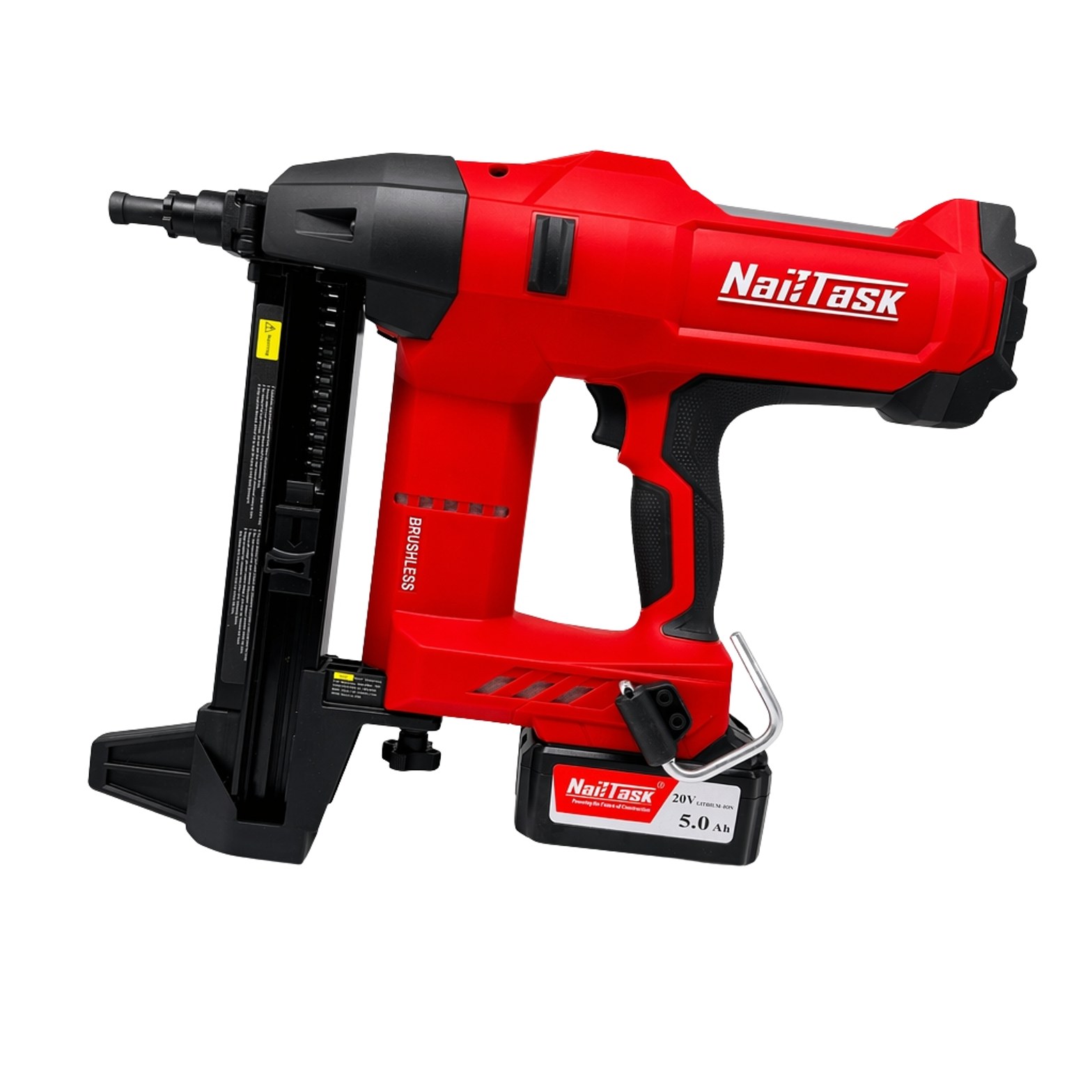
How to Choose a 20V Cordless Concrete Nailer
Choosing a cordless concrete nailer is less about a single “best” model and more about matching impact energy, fastener system, and tool size to the substrate and the work. In the NailTask 20V range, that decision usually comes down to three industrial-grade tools: the 100J multi-purpose pin nailer, the compact 90J pin nailer, and the 80J ST38 T-nailer.
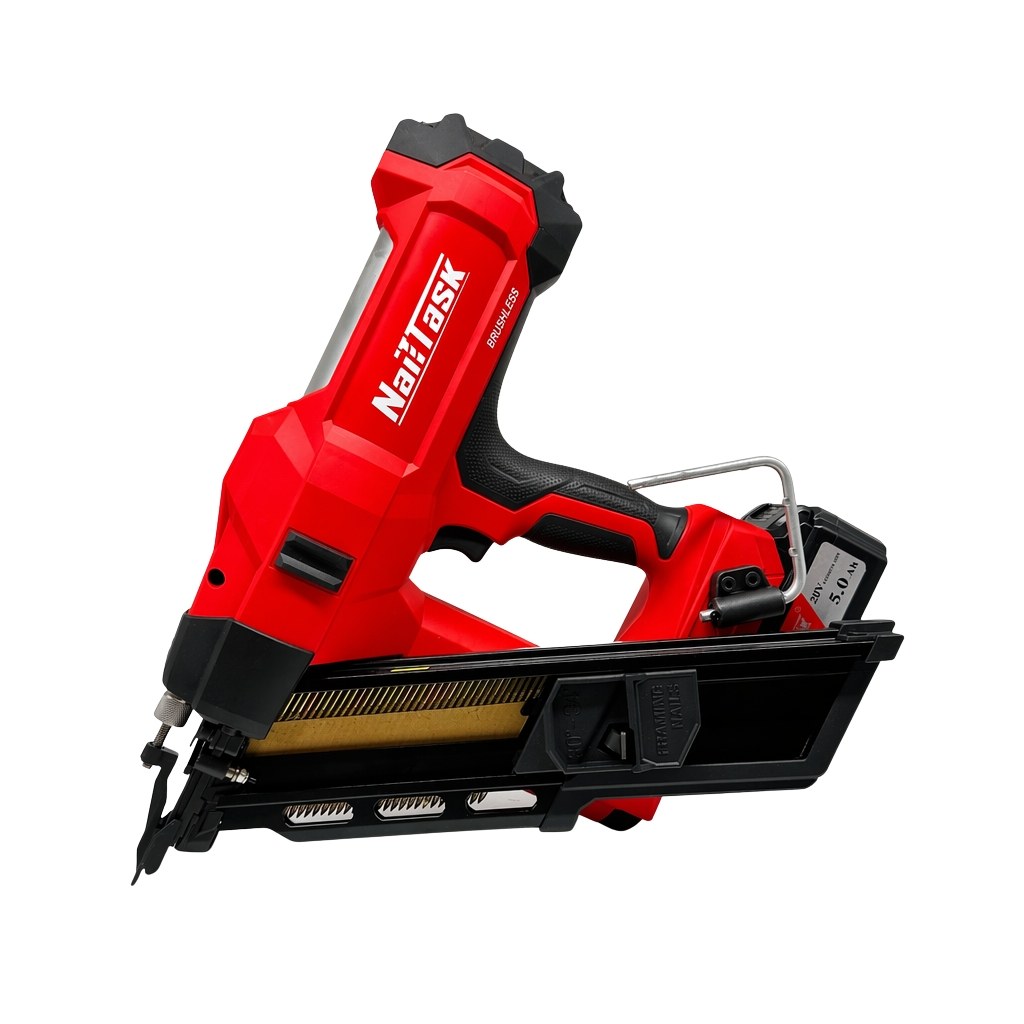
34° vs 21° Cordless Framing Nailers: Which System to Specify
Framing nailers are often compared by angle alone, but the angle is a shorthand for the collation, the nail head, the magazine, and the work the tool is built to do. In the NailTask 20V cordless range, the two industrial-grade framing tools share the same 110J impact energy and the same 50–90 mm nail length. They do not share the same fastener system. This guide compares the 34° paper-collated clipped-head nailer with the 21° plastic-collated full-round-head nailer, including when duplex nails and formwork matter.
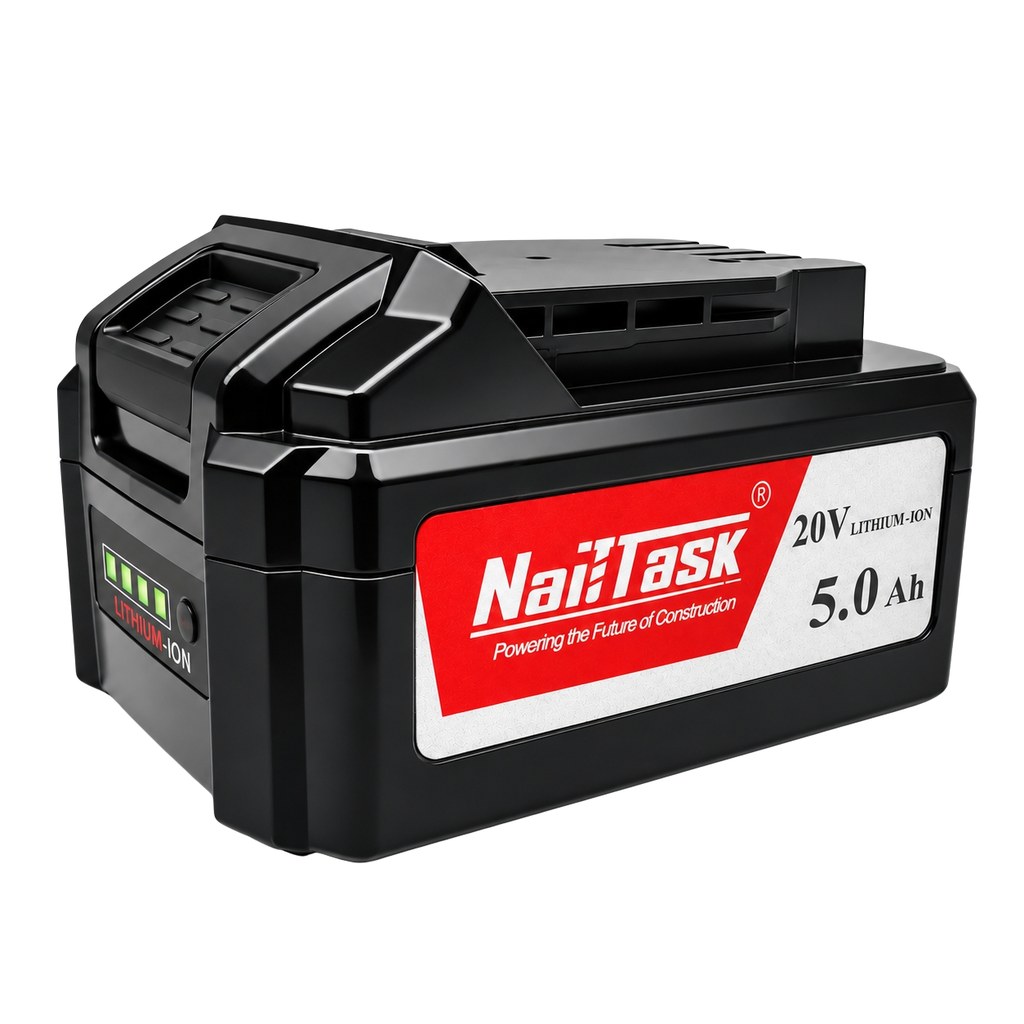
How to Care for 20V Lithium-Ion Nailer Batteries
A cordless nailer is only as ready as the battery that powers it. This guide covers practical care for NailTask 20V lithium-ion batteries used on industrial-grade nailers, based on official platform facts: the -20°C to 50°C operating temperature window, the 5.0Ah and 2.5Ah packs used in standard kits, and the difference between a standard kit and a bare-tool kit. It does not invent charge-cycle life, charge-time minutes, or capacity-fade percentages, because those figures are not stated in the official product knowledge base.
Want to Learn More?
Contact our expert team for professional advice and product consultation