Cordless vs Gas and Powder Concrete Fastening: A Practical Comparison
What each system asks of a jobsite
Powder-actuated tools use a controlled explosive charge to drive a pin. They are compact and can be very capable in hard concrete and steel, but they bring licensed-operator rules in many markets, a consumable powder inventory, noise and fumes, and tighter restrictions in occupied or poorly ventilated buildings.
Gas or fuel-cell tools use a fuel cartridge and, typically, a battery to ignite it. They offer cordless movement compared with pneumatics, at the price of a regular fuel-cell supply, cold-weather fuel behavior, and combustion by-products. Cartridge logistics are part of the operating cost and of the warehouse plan.
Pneumatic concrete tools depend on a compressor and a hose. They can run all day when the air supply is stable, but the compressor is heavy, the hose limits movement, and indoor or multi-floor MEP work becomes a logistics exercise.
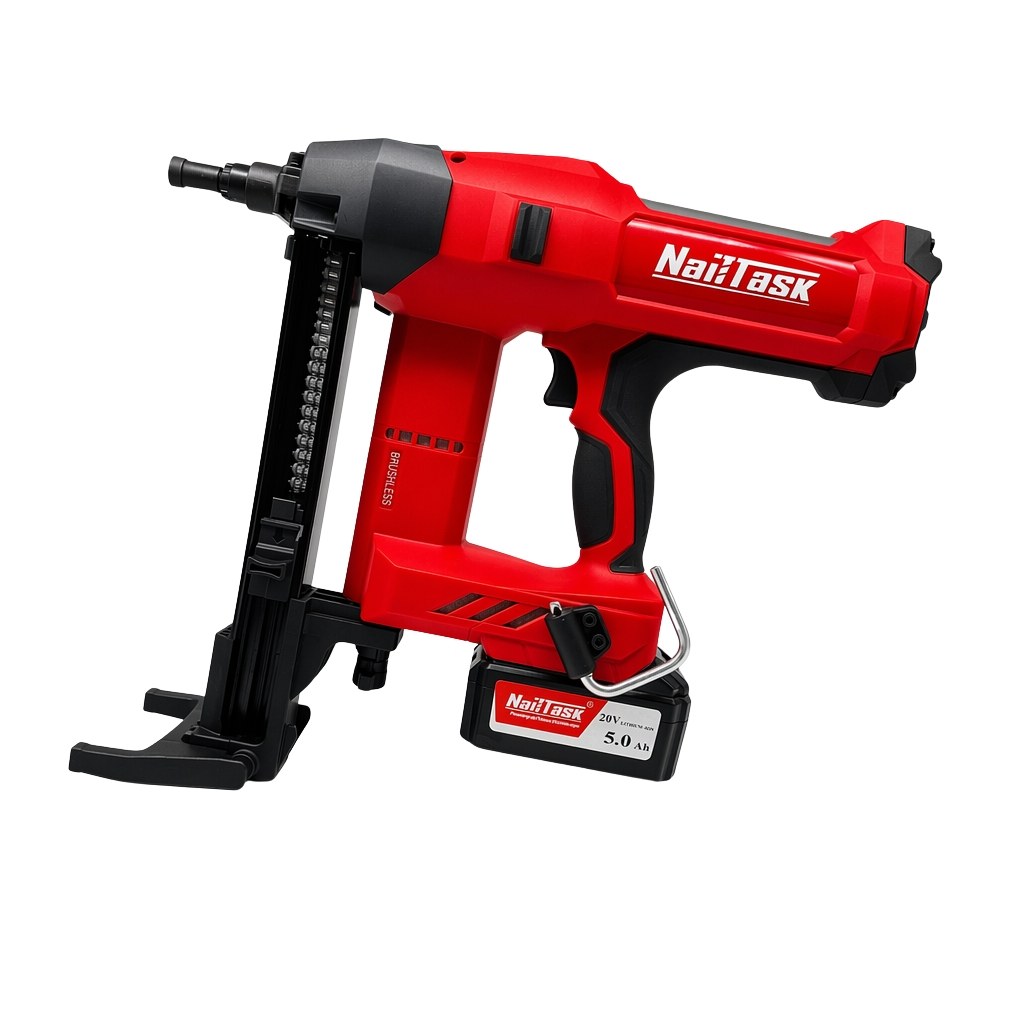
Cordless 20V lithium-ion nailers, such as the NailTask concrete range, drive pins or T-nails with a brushless electric impact system. Official product descriptions state that no air compressor, pneumatic hose, or gas cartridge is required. The consumables become fasteners and charged battery packs.
None of these systems removes the need to match energy, fastener, and substrate. A cordless tool is not automatically the right choice for every concrete pin, and a powder tool is not automatically outdated.
Logistics and mobility
On open civil sites, a compressor or a powder-tool kit can be staged and left. On MEP floors, occupied renovations, retail fit-outs, and scattered punch-list work, movement is the constraint. A cordless concrete nailer can be carried between rooms and risers without trailing a hose or managing fuel cells at each stop. Official NailTask applications for the pin tools include MEP and electrical installation, conduit, cable, pipe fixing, ceiling grid, and HVAC — work that often happens in exactly those conditions.
The compact DCCN90S3 is specified for confined spaces, with a body of 390 × 110 × 320 mm and an ultra-compact nose housing for narrow channels and overhead grids. The DCCN100X2 adds a 100J class and a longer 15–40 mm pin range, including official copy for C40/C45 structural concrete. The DCCN80-ST38L covers ST38 T-nail work such as battens and clips. A fuller model comparison is in the concrete nailer guide and the gas-free MEP guide.
Gas and powder tools also move without a hose. Their logistics cost is the consumable chain: cartridges or powder loads must be stocked, transported as the relevant dangerous-goods or workplace rules require, and managed so that a crew does not run out mid-shift. Cordless crews instead manage pack charging and reserve batteries.
Indoor air, fumes, and occupied buildings
This is often the decisive point for indoor MEP and renovation, including work in Europe and in air-conditioned commercial buildings in the Middle East and Southeast Asia.
Powder and gas tools produce combustion products and, in many workplaces, trigger ventilation, permit, or occupant-notification rules. Cordless electric drive does not eliminate dust from the substrate, and eye and hearing protection still apply, but it does not add a fuel-cell or powder exhaust stream. Official NailTask descriptions of the concrete tools emphasize cordless operation without a gas cartridge.
If a specification already requires a powder tool for a particular steel or concrete fastening, follow that specification. If the work is clip, track, and conduit fastening in occupied or confined interiors, a cordless pin or ST38 tool is often easier to justify to a site manager.
Running costs — qualitative only
This article does not invent dollar or euro figures, because energy prices, cartridge prices, and labor rates vary by market and are not in the official knowledge base.
A fair qualitative comparison is:
- Powder and gas tools add a consumable charge or cartridge to every series of shots, plus the administrative cost of stocking those consumables.
- Pneumatic tools add compressor fuel or power, maintenance, and the time cost of setup and hose management.
- Cordless tools add battery packs, a charger, and eventual pack replacement, plus the electricity used to charge. Standard NailTask kits include a battery and a fast charger; bare-tool kits do not, which matters if a fleet already holds 20V packs.
Whether cordless is cheaper to run depends on shot volume, local cartridge prices, and how often a crew is interrupted by hoses or empty fuel cells. Do the arithmetic with your own supplier prices. Do not use an unpublished percentage saving in a tender.
Pins or nails per charge on the NailTask concrete tools are official “up to” values (900 pins, 1,000 pins, or 800 T-nails depending on the model) and will vary with substrate and fastener. They are planning figures, not guarantees.
Where gas or powder may still be the better specification
A fair comparison should say this clearly. Powder or specialist gas tools may still be specified where:
- A structural fastening standard calls for a powder-actuated system
- The substrate and pin combination is outside the cordless tool’s official fastener range
- A site already has licensed powder-tool operators and a controlled consumable store
- A particular inspection regime is built around an existing method
In those cases, cordless tools may still have a role for secondary MEP and batten work, rather than as a blanket replacement.
Shared professional controls
If you do move a portion of work to cordless, specify the fastener correctly, brief the official -20°C to 50°C operating window, and set a battery routine for cold and heat. See the battery care guide. NailTask products are tested and certified by TÜV and comply with applicable CE and RoHS requirements; include the documents your market requires.
FAQ
Does a NailTask cordless concrete nailer need a gas cartridge or a compressor? No. Official descriptions state that no air compressor, pneumatic hose, or gas cartridge is required.
Can cordless tools replace every powder-actuated fastening? Not necessarily. Replacement depends on the substrate, the fastener, and the project specification. Official energy classes and length ranges must be respected, and some structural fastenings will remain on powder systems.
Are running-cost savings stated as a percentage in this guide? No. Running costs should be calculated from local cartridge, power, and battery prices. This article does not publish invented figures.
Talk with NailTask Global
To discuss cordless concrete tools for indoor MEP or mixed-jobsite fleets, contact NailTask Global Co., Ltd. at info@nailtaskglobal.com, WhatsApp +86 18574729565, telephone +86 734 2813008, or the contact page. Distributors may also use the distributor inquiry page.
Related Articles
How to Choose a 20V Cordless Concrete Nailer
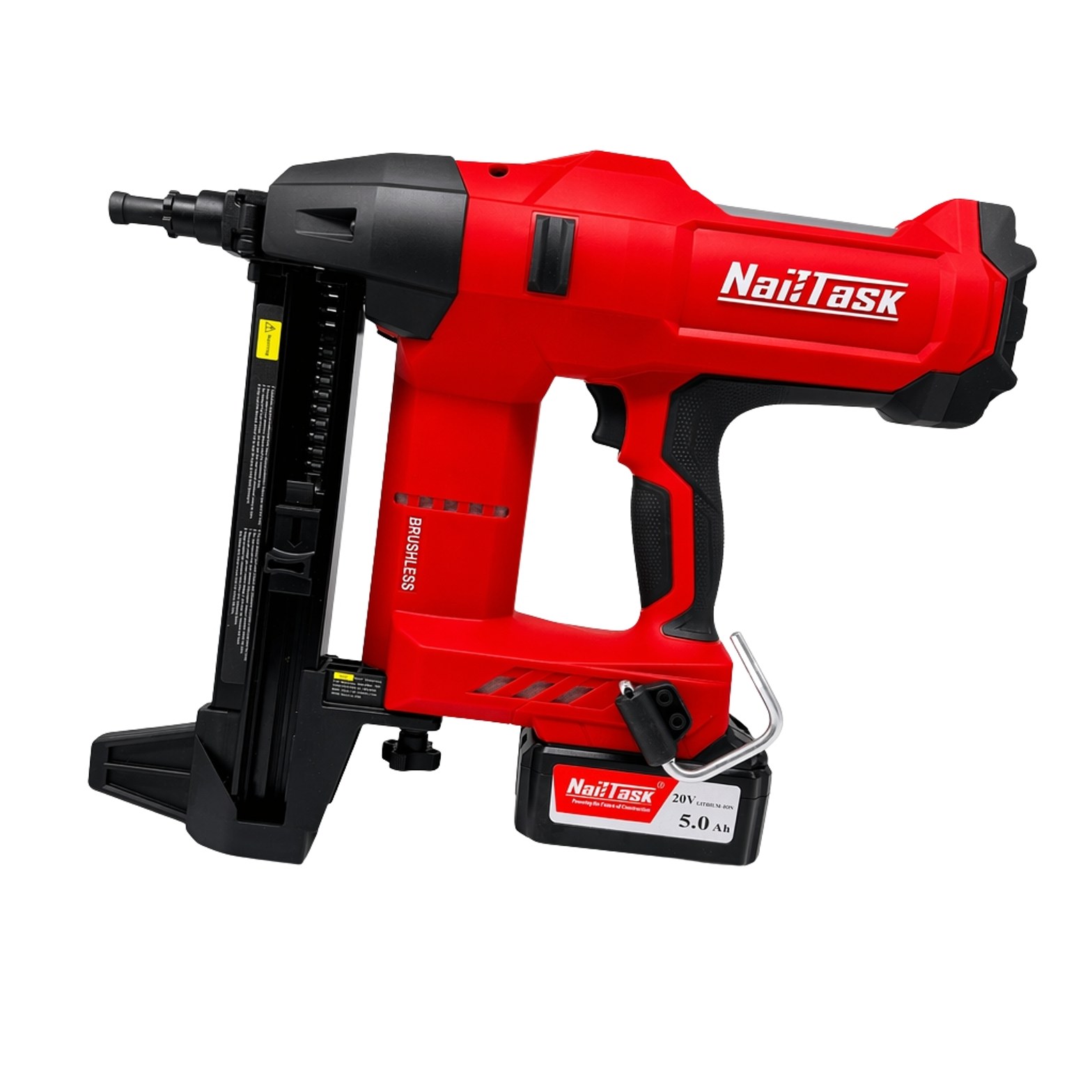
Choosing a cordless concrete nailer is less about a single “best” model and more about matching impact energy, fastener system, and tool size to the substrate and the work. In the NailTask 20V range, that decision usually comes down to three industrial-grade tools: the 100J multi-purpose pin nailer, the compact 90J pin nailer, and the 80J ST38 T-nailer.
34° vs 21° Cordless Framing Nailers: Which System to Specify
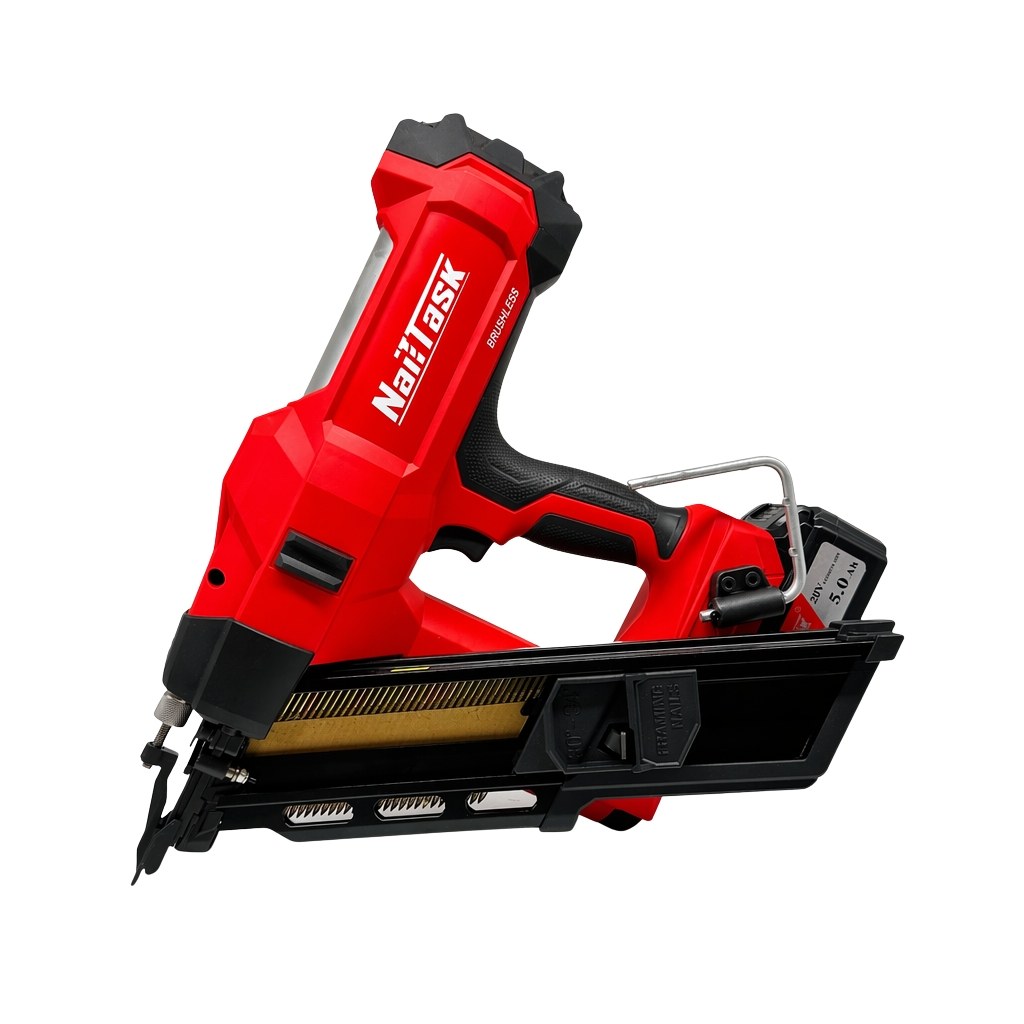
Framing nailers are often compared by angle alone, but the angle is a shorthand for the collation, the nail head, the magazine, and the work the tool is built to do. In the NailTask 20V cordless range, the two industrial-grade framing tools share the same 110J impact energy and the same 50–90 mm nail length. They do not share the same fastener system. This guide compares the 34° paper-collated clipped-head nailer with the 21° plastic-collated full-round-head nailer, including when duplex nails and formwork matter.
How to Care for 20V Lithium-Ion Nailer Batteries
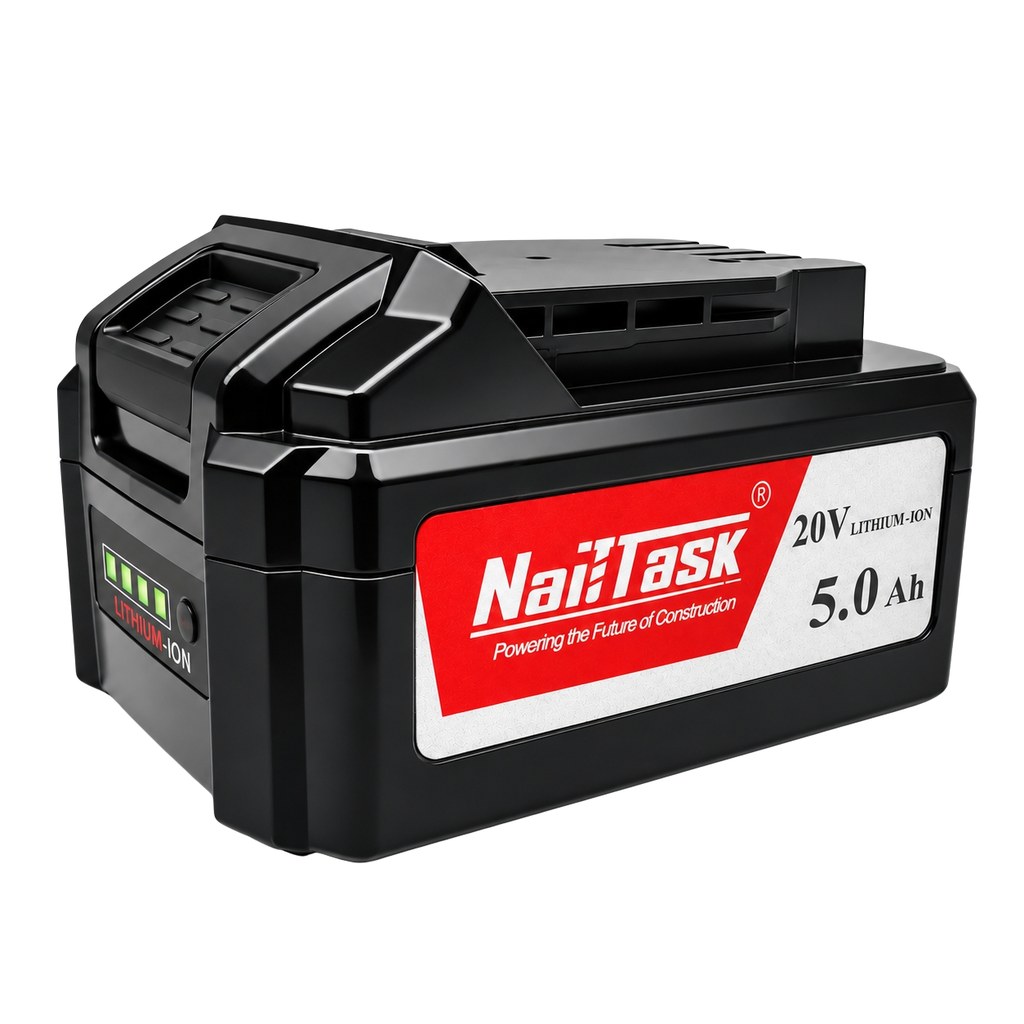
A cordless nailer is only as ready as the battery that powers it. This guide covers practical care for NailTask 20V lithium-ion batteries used on industrial-grade nailers, based on official platform facts: the -20°C to 50°C operating temperature window, the 5.0Ah and 2.5Ah packs used in standard kits, and the difference between a standard kit and a bare-tool kit. It does not invent charge-cycle life, charge-time minutes, or capacity-fade percentages, because those figures are not stated in the official product knowledge base.
Want to Learn More?
Contact our expert team for professional advice and product consultation