Gas-Free Cordless Fastening for MEP, Electrical, and HVAC Work
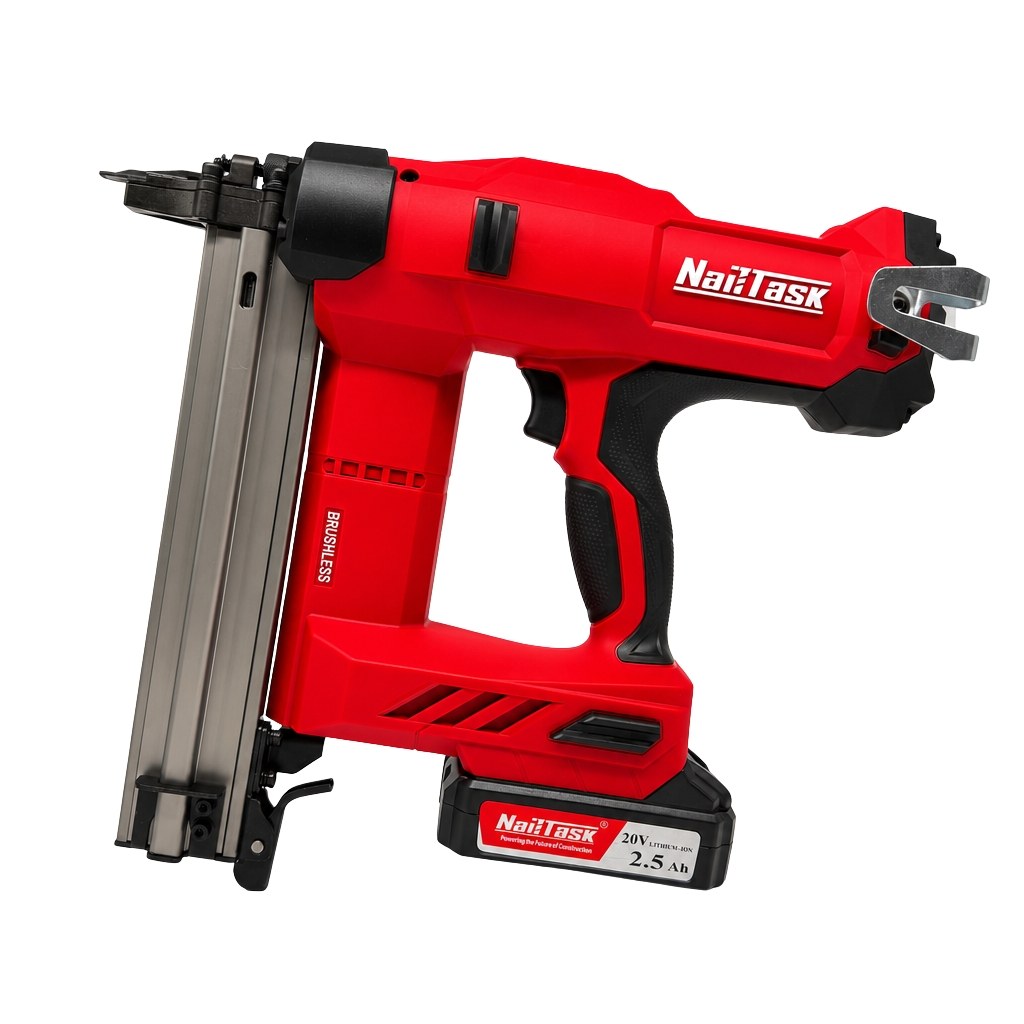
“Gas-free” here means the official cordless advantage stated for these tools: no air compressor, pneumatic hose, or gas cartridge is required. The consumables are fasteners and charged 20V battery packs.
What MEP fastening usually looks like
Typical fasteners on an MEP floor are clips, brackets, tracks, and light fixtures going into concrete, masonry, or steel — not framing nails into timber. Official NailTask applications that map onto that work include:
- DCCN100X2: MEP and electrical installation, wire mesh fastening, window-frame anchoring, pipe fixing, and cable installation
- DCCN90S3: MEP contracting, drywall track installation, electrical conduit mounting, overhead ceiling-grid suspension, HVAC ductwork, and general concrete or masonry fastening in confined spaces
- DCCN80-ST38L: conduit clips, trunking, and pipe straps to concrete, as well as timber battens and related masonry fixing with ST38 T-nails
The first specification fork is still the fastener family. Plastic-strip concrete pins and 14-gauge ST38 T-nails are not interchangeable. Choose the pin tools for collated concrete drive pins, and the ST38 tool when the crew already uses T-nails for clips and battens. A model-level comparison is in the cordless concrete nailer guide. For a broader method comparison, see cordless versus gas concrete nailers.
Why crews look at cordless tools in confined interiors
Occupied buildings, hospitals, schools, data halls, and retail fit-outs often restrict combustion fumes and limit compressor noise. Multi-floor work also punishes long hoses. A 20V cordless pin or T-nailer can be carried into a ceiling void or a shaft, used for a run of clips, and moved without staging a fuel-cell crate or a compressor on the same floor.
That is a logistics and workplace-environment argument. It is not a claim that every powder or gas fastening on a project can be replaced, and it is not a claim of a measured number of hours saved.
Choosing between the 100J and 90J pin tools
Both pin tools use plastic-strip collated pins, Ø 2.6–3.0 mm, a 33-pin magazine, single sequential firing, and a speed of up to 90 pins per minute, with a 20V 5.0Ah battery in the standard kit.
The DCCN100X2 is the 100J tool with a 15–40 mm (5/8″–1-9/16″) pin range, up to 900 pins per charge, and a body of 420 × 120 × 320 mm. Official copy describes high-performance fastening into C40/C45 structural concrete, steel plate, and heavy timber. Specify it when the MEP brief includes harder concrete, a need for pins up to 40 mm, or mixed work such as window-frame anchoring and wire mesh alongside cable and pipe fixing.
The DCCN90S3 is the compact 90J tool with a 15–27 mm (5/8″–1-1/16″) pin range, up to 1,000 pins per charge, and a body of 390 × 110 × 320 mm. Official feature copy highlights an ultra-compact nose housing and maneuverability in confined working areas, overhead ceiling grids, and narrow drywall channels. Specify it when access is the main constraint: tight risers, ceiling grids, and track or conduit in narrow channels. Its official copy does not use the C40/C45 designation; test on the actual substrate if concrete strength is high.
Both official substrate lists include concrete, structural steel, wood, brick, masonry, and metal profiles (structural steel is listed for the pin tools; the ST38 list includes steel and metal profiles). Always test on the site material, especially on steel thickness and on hollow or variable masonry.
When the ST38 T-nailer belongs on an MEP cart
The DCCN80-ST38L is an 80J tool for 14-gauge ST series T-nails, 18–38 mm (3/4″–1-1/2″), Ø 2.20 mm, with a 97-nail magazine, dual firing modes, a speed of up to 180 nails per minute, a 2.5Ah battery in the standard kit, and up to 800 nails per charge. The body is 330 × 100 × 300 mm.
For MEP, its official relevance is conduit clips, trunking, and pipe straps to concrete, together with plywood or batten work that often sits alongside services. If the electrical or mechanical package already specifies ST38 T-nails, do not substitute a Ø 2.6–3.0 mm pin tool without a new fastener approval.
Jobsite practice without invented productivity claims
Plan the day around batteries and fasteners, not around a catalog speed alone. Official firing rates (up to 90 pins per minute or up to 180 ST38 nails per minute) and pins or nails per charge are “up to” figures. Sequential pin placement, overhead work, and moving between fixings will dominate the clock.
Practical rules that do belong in an MEP briefing:
- Use a compact pin tool where the nose must fit a grid or a channel.
- Keep spare 20V packs charged; standard kits include a battery and a fast charger, bare-tool kits do not.
- Observe the official -20°C to 50°C operating window, including cold plant rooms and hot roof plant. See the battery care guide and cordless nailing in cold and heat.
- Set depth on a test fixing before a visible soffit or a painted wall.
- Do not assume a standard 20V kit accepts Makita® batteries; a separate Makita® 18V LXT® compatible version is available and is OEM-customizable.
NailTask products are tested and certified by TÜV and comply with applicable CE and RoHS requirements. Include the documents required by the project and the market, whether that market is in Europe, South America, the Middle East, or Southeast Asia.
FAQ
Which NailTask tool is intended for confined-space MEP work? The DCCN90S3 compact 90J pin nailer is officially specified for MEP, conduit, ceiling-grid, HVAC, and general fastening in confined spaces, with an ultra-compact nose housing.
When should I specify the 100J DCCN100X2 instead? When you need the longer 15–40 mm pin range and the 100J class, including work described in official copy as fastening into C40/C45 structural concrete, steel plate, and heavy timber, together with mixed MEP and anchoring tasks.
Can I use ST38 T-nails in the pin tools? No. The DCCN80-ST38L is the ST38 T-nailer. The DCCN100X2 and DCCN90S3 use plastic-strip collated concrete pins.
Does this guide claim a labor-hour saving versus gas tools? No. It describes gas-free logistics and official tool specifications. Any labor comparison should be measured on your own site.
Talk with NailTask Global
To specify pin or ST38 tools for MEP fleets or distribution, contact NailTask Global Co., Ltd. at info@nailtaskglobal.com, WhatsApp +86 18574729565, telephone +86 734 2813008, or the contact page. Distributors may also use the distributor inquiry page.
Related Articles
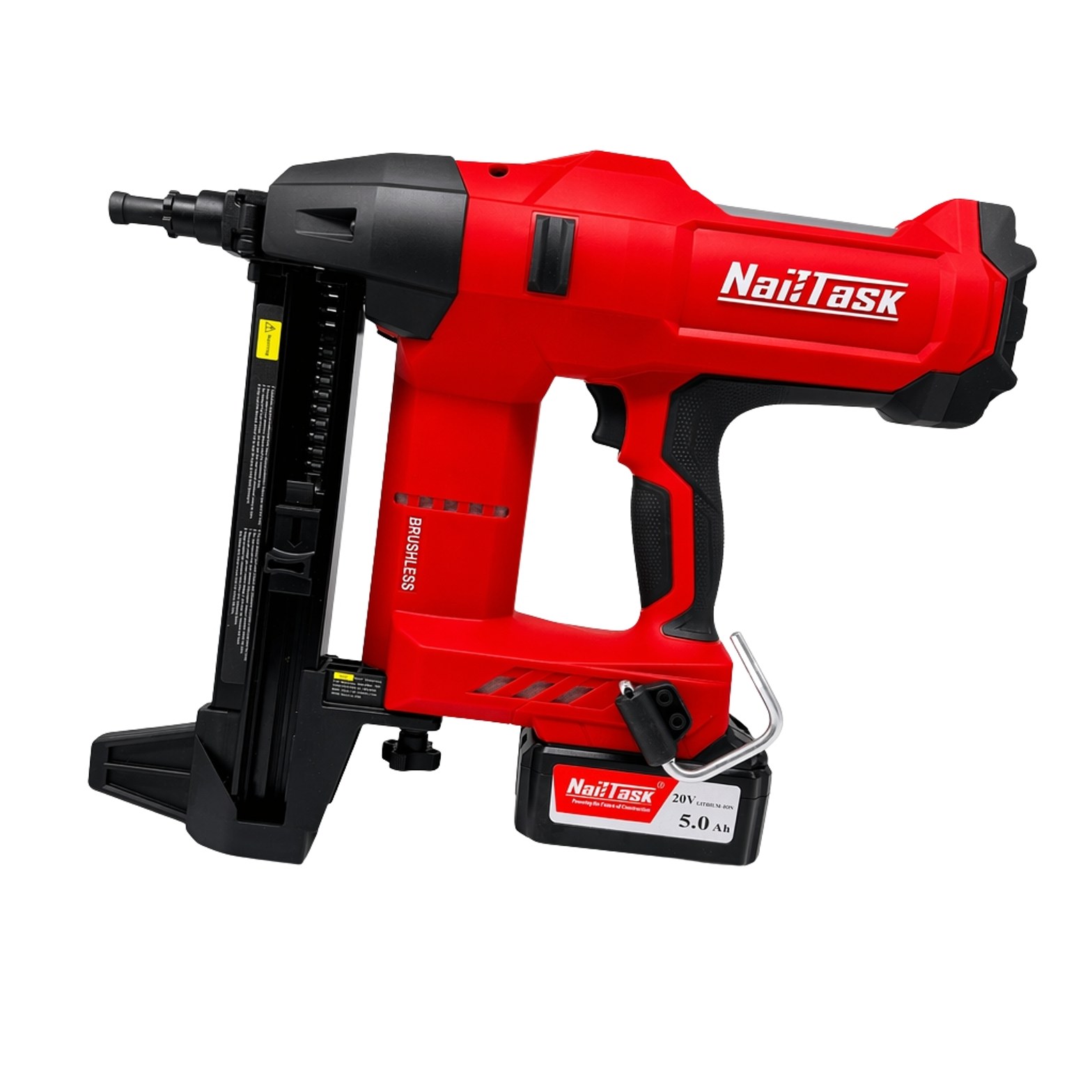
How to Choose a 20V Cordless Concrete Nailer
Choosing a cordless concrete nailer is less about a single “best” model and more about matching impact energy, fastener system, and tool size to the substrate and the work. In the NailTask 20V range, that decision usually comes down to three industrial-grade tools: the 100J multi-purpose pin nailer, the compact 90J pin nailer, and the 80J ST38 T-nailer.
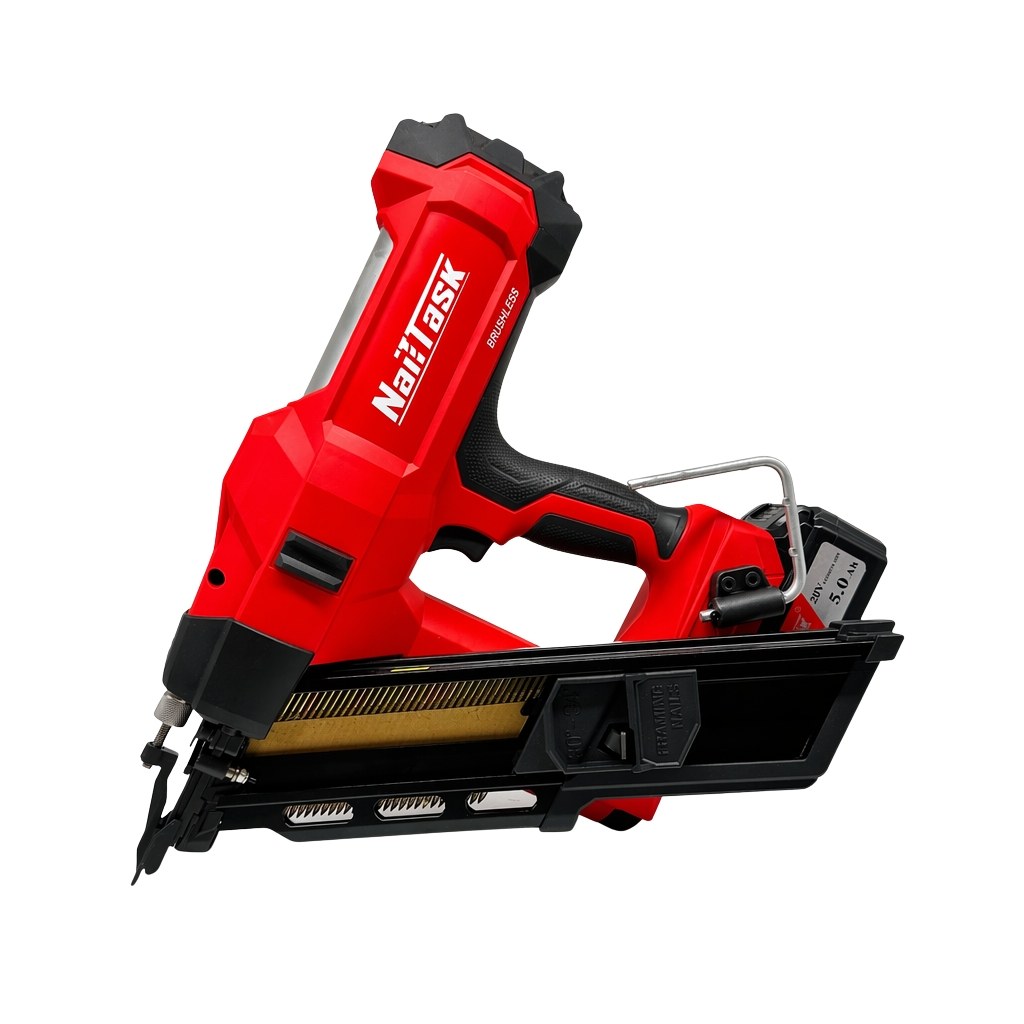
34° vs 21° Cordless Framing Nailers: Which System to Specify
Framing nailers are often compared by angle alone, but the angle is a shorthand for the collation, the nail head, the magazine, and the work the tool is built to do. In the NailTask 20V cordless range, the two industrial-grade framing tools share the same 110J impact energy and the same 50–90 mm nail length. They do not share the same fastener system. This guide compares the 34° paper-collated clipped-head nailer with the 21° plastic-collated full-round-head nailer, including when duplex nails and formwork matter.
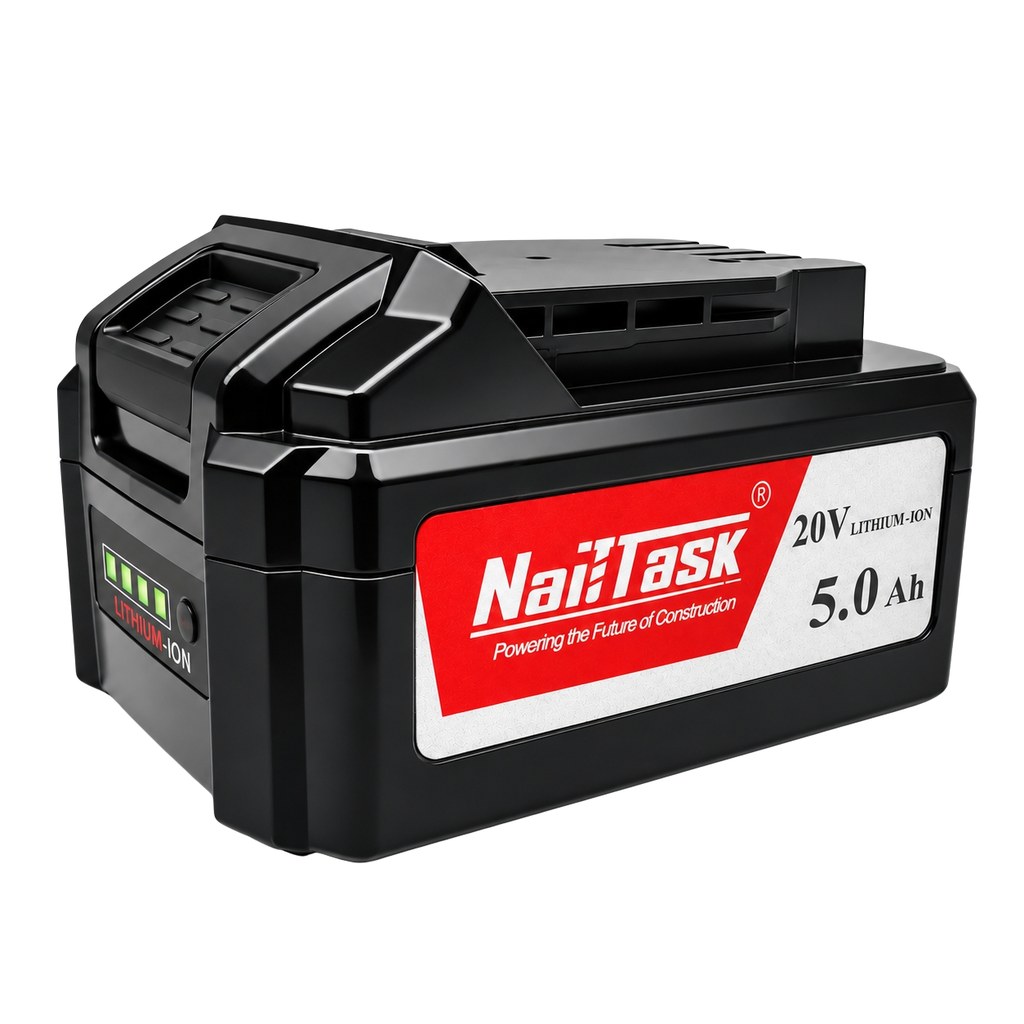
How to Care for 20V Lithium-Ion Nailer Batteries
A cordless nailer is only as ready as the battery that powers it. This guide covers practical care for NailTask 20V lithium-ion batteries used on industrial-grade nailers, based on official platform facts: the -20°C to 50°C operating temperature window, the 5.0Ah and 2.5Ah packs used in standard kits, and the difference between a standard kit and a bare-tool kit. It does not invent charge-cycle life, charge-time minutes, or capacity-fade percentages, because those figures are not stated in the official product knowledge base.
Want to Learn More?
Contact our expert team for professional advice and product consultation